
When Is the Right Time to Partner With a Webflow SEO Expert?
- Webflow ships strong SEO fundamentals out of the box, but default settings alone rarely produce top-tier rankings.
- A Webflow SEO expert becomes valuable once a site needs structured data, CMS-level content architecture, and AEO optimization, not just basic settings.
- Webflow’s 2026 AI-powered SEO and AEO tools automate schema and metadata suggestions, but they still require someone who understands how to apply them strategically.
- Pricing for Webflow SEO expertise ranges widely depending on whether the work is a one-time audit, an ongoing retainer, or a full technical rebuild.
- The strongest Webflow SEO experts combine platform-specific technical skills with broader SEO and AEO strategy, not just on-page settings.
- Red flags include agencies that treat Webflow SEO as identical to WordPress SEO, or that cannot explain schema, crawlability, and Core Web Vitals in specific terms.
Webflow is a capable SEO platform. It generates clean HTML, automatic sitemaps, and now ships native schema recommendations through Webflow AI. But capability is not the same as execution. Most teams configure the basics - a title tag and meta description - and assume that’s just enough.
In practice, ranking and AI-citation performance depend on decisions most non-specialists never touch: content models, canonical structure, structured data depth, and how content is written to be extracted by both search engines and AI systems. That gap is exactly where a Webflow SEO expert earns their fee.

Is Webflow Good for SEO?
Yes - Webflow is generally considered a strong SEO platform, and it has become more competitive in 2026 with the rollout of AI-powered SEO and AEO tools built directly into Page Settings. The platform generates semantic HTML, automated sitemaps, and now recommends schema types based on page content, without requiring any custom code or scripts.
This is the core tension: Webflow gives you the tools, but the tools still require someone who knows how to use them for your specific content and business goals.
When Does It Make Sense to Bring in a Webflow SEO Expert?
Not every Webflow site needs a specialist right away. A simple, low-traffic marketing site can often run on native settings alone. The right time to bring in a Webflow SEO expert is when one or more of the following becomes true.
If none of these apply yet, in-house management of Webflow’s native SEO settings may be enough for now.
What a Webflow SEO Expert With Strong Technical Skills Should Deliver
A Webflow SEO expert agency should be able to go beyond the settings panel. Technical depth is what separates a general marketer who “does SEO on the side” from a specialist who can diagnose and fix platform-specific issues.
This is also the clearest way to evaluate “which Webflow SEO expert should I hire?”
Ask for evidence in each of these six areas, not just a portfolio of nice-looking sites.
Webflow SEO Settings Most Teams Get Wrong
Even teams that are aware of Webflow’s SEO fields often misconfigure them in ways that quietly hurt performance.
- Leaving utility, style guide, or password-protected pages inside the sitemap instead of excluding them.
- Skipping canonical URLs on pages that have near-duplicate content across CMS templates.
- Using default Open Graph images instead of setting unique ones for key landing and blog pages.
- Uploading oversized, uncompressed images instead of optimizing before upload, which drags down LCP.
- Relying only on Webflow’s AI-suggested schema without checking that the schema type matches page intent.
- Treating 302 redirects as sufficient for URL changes, when 301s are needed to preserve link equity.
These are not “oh it happens occasionally” mistakes. They are common, and they are exactly the kind of gaps a Webflow SEO expert agency is trained to catch during an audit.
What Is the Best Webflow SEO and AEO Agency?
There is no single universal answer, because “best” really depends on your stage, industry, and goals. But the strongest Webflow SEO and AEO agencies in 2026 tend to share a few traits:
Webflow-specific technical fluency, real AEO and GEO experience (not just traditional SEO relabeled), and transparent reporting tied to business outcomes, not just rankings.
For B2B SaaS and tech companies specifically, the dedicated Webflow SEO/AEO agency tier tends to offer the best balance of platform depth and strategic guidance, because the work spans CMS architecture, technical SEO, and content-led AEO simultaneously.
Questions to Ask Before Partnering With a Webflow SEO Expert
- “Do you approach schema differently in Webflow compared to other platforms?”
- “Can you show a before/after example of a Webflow Core Web Vitals fix?”
- “How do you structure content so it performs in both traditional search and AI?”
- “What does your reporting look like beyond rankings?”
- “How do you handle SEO risk during a Webflow migration?”
If the answers feel vague or generic, the expertise may be surface-level.
Red Flags to Avoid
Treating Webflow SEO as identical to WordPress or Shopify SEO
This is a red flag because each platform exposes different controls, defaults, and limitations. Webflow now has native schema support, page-level audits, AI-generated metadata suggestions, and AEO-specific capabilities built into the platform, so a copy-paste approach from another CMS usually misses the parts that matter most.
What should happen instead is a platform-specific audit. A strong Webflow SEO expert should review how Webflow handles indexing, redirects, schema, CMS structure, and audit suggestions, then adapt the strategy to those controls rather than forcing a generic SEO checklist onto the site
No mention of AEO, structured data strategy, or AI search visibility
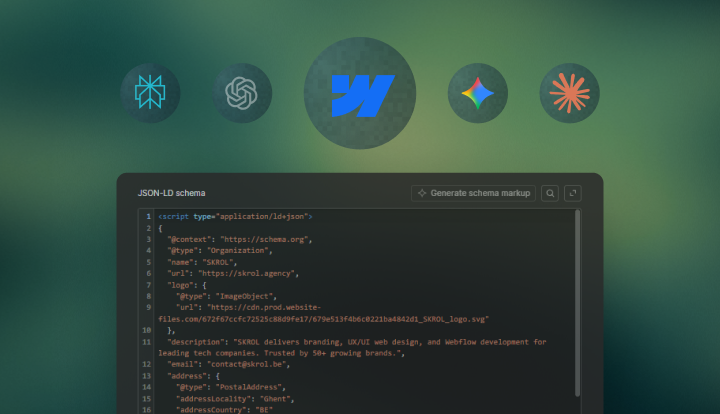
This is a red flag because modern search is no longer only about blue links. Webflow explicitly positions its 2026 update around SEO and AEO, with native schema support, AI-recommended schema types, and AI visibility tooling, so any strategy that ignores AEO is already behind the platform and the market.
What should happen instead is a content and schema plan that is designed for both search engines and answer engines. That means the agency should explain which schema types are used, how content is structured for extractability, and how the site will be improved for AI visibility over time, not just how it will rank for keywords.
Reporting that focuses only on keyword rankings, not traffic quality or outcomes
This is a red flag because rankings alone don’t tell you whether SEO is actually helping the business. A site can rank for terms that attract the wrong audience, and with AI-driven discovery becoming more important, traffic quality and conversion behavior matter more than vanity position reports.
What should happen instead is reporting that ties SEO work to meaningful outcomes: qualified traffic, conversions, assisted pipeline, and performance by page type or intent group. A better Webflow SEO partner should connect rankings to business value and show which content and technical changes are producing real movement.
No clear point of contact for ongoing technical issues after the audit or project ends
This is a red flag because SEO work does not end when the audit is delivered. Webflow sites still need follow-up on redirects, metadata, schema updates, CMS changes, and AI-powered audits, and without a clear owner those issues tend to pile up until they create avoidable losses.
What should happen instead is an explicit support model. The agency should define who handles post-launch fixes, how fast issues are reviewed, and whether the team offers ongoing technical monitoring or implementation support after the initial project is complete.
Inability to explain Webflow’s AI-powered tools and how they fit into the strategy
This is a red flag because it usually means the partner is not keeping up with the platform. Webflow’s own updates say the Audit panel can now surface missing alt text, meta titles, meta descriptions, and schema markup, while AI can recommend fixes and even support AEO analytics and agents.
What should happen instead is a clear plan for using those tools without becoming dependent on them. A strong expert should explain which issues can be handled with Webflow AI, which ones still need human judgment, and how those tools fit into a wider technical SEO and content strategy.
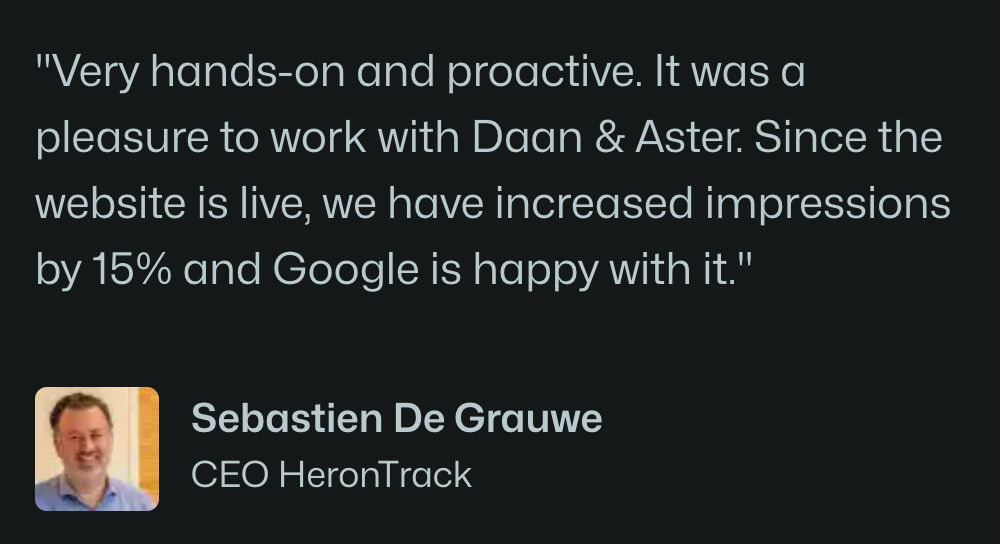
Real Life Example: HeronTrack
On the HeronTrack migration project, we combined redesign, multilingual Webflow development, redirect mapping, and SEO cleanup into one rebuild. That meant the new site was not only clearer for users, but also easier for search engines to crawl and interpret.
After launch, the site saw a 15% increase in impressions, which is a good reminder that the right Webflow partner can improve both the experience and the search foundation at the same time.
The Bottom Line
Webflow gives you a strong technical foundation for SEO, and its 2026 AI-powered SEO and AEO tools have narrowed the gap between default settings and expert-level optimization. But tools don’t replace judgment. The right time to bring in a Webflow SEO expert is when your growth depends on structural decisions - content architecture, schema strategy, AEO positioning, and technical fixes - that go beyond what the settings panel can solve on its own.
Frequently Asked Questions
Yes. Webflow generates clean semantic HTML, automatic sitemaps, and now includes AI-powered schema and metadata suggestions, giving sites a strong technical foundation for SEO.
Look for an agency or specialist who can explain Webflow-specific technical SEO, structured data strategy, and AEO positioning, not just general SEO advice relabeled for Webflow.
The best fit depends on your stage and goals, but growth-stage B2B teams typically benefit most from a dedicated Webflow SEO/AEO specialist rather than a generalist agency.
Sitemap and canonical management, schema markup, Core Web Vitals, and Open Graph settings matter most, since these are the areas most often misconfigured by non-specialists.
Cost depends on scope: a one-time audit is priced far lower than an ongoing retainer or a full migration project with SEO built in from the start.